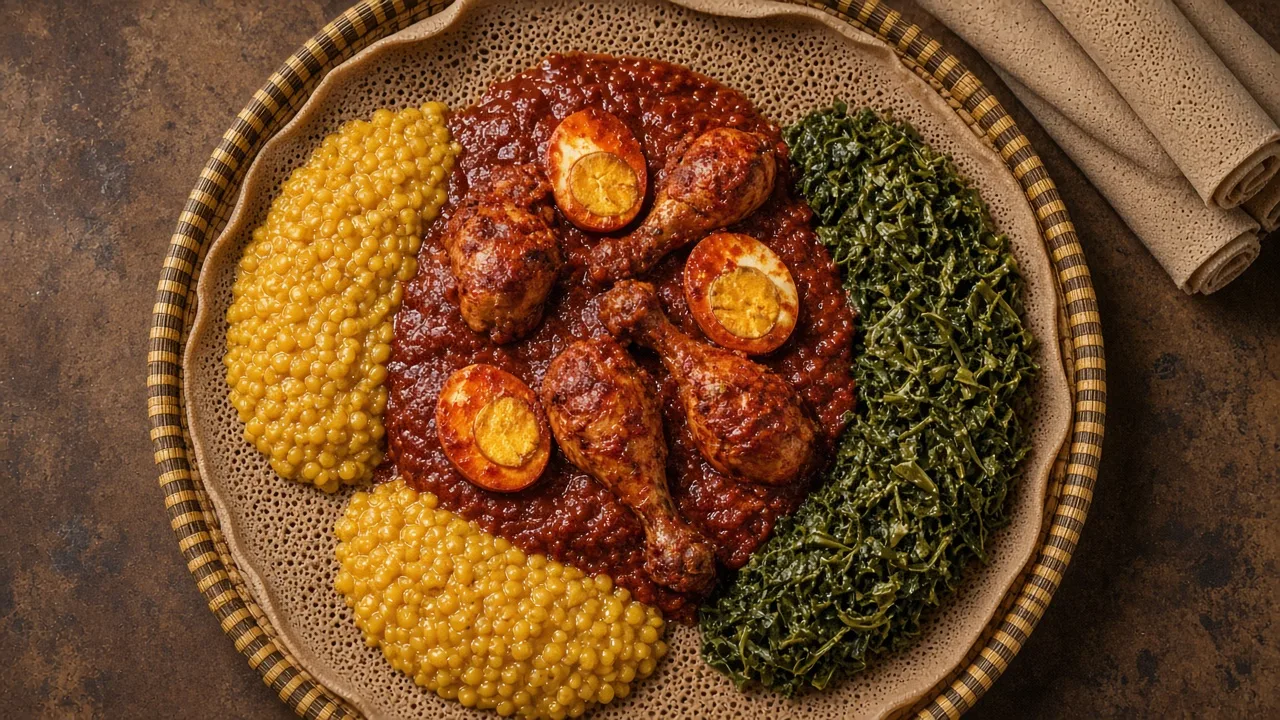
Where Doro Wat Comes From
Doro wat is one of the most important dishes in Ethiopian cuisine. It is often prepared for celebrations and religious holidays, particularly at the end of fasting periods in the Ethiopian Orthodox calendar, and it is commonly served when guests visit. The word doro means chicken and wat refers to a thick stew.
The dish has three essential elements. First is a large quantity of red onions cooked very slowly, traditionally without oil at the beginning, until they break down into a sweet, jammy base. Second is berbere, a vibrant blend of chillies and warm spices. Third is niter kibbeh, butter clarified with spices and aromatics. Together they create a deep, glossy and spicy sauce, which surrounds tender chicken and whole hard-boiled eggs. Doro wat requires patience, but the steps themselves are simple.
Serves: 4–6 | Prep: 30 minutes | Cook: 2 hours
Ingredients
Stew
- 1.2 kg (2.6 lb) chicken drumsticks and thighs, skin removed
- Juice of 1 lemon
- 1 tsp salt
- 1 kg (2.2 lb) red onions, very finely chopped
- 80–100 g (⅓–½ cup) niter kibbeh, or ghee or butter
- 4 garlic cloves, crushed
- 2 tbsp grated ginger
- 3–4 tbsp berbere spice blend (adjust for heat)
- 2 tbsp tomato paste (optional)
- 500 ml (2 cups) water or chicken stock
- 6 hard-boiled eggs, peeled
- ½ tsp ground cardamom (korarima if available)
- Salt to taste
Quick niter kibbeh (if making your own)
- 250 g (1 cup) unsalted butter
- ¼ onion, chopped, 2 garlic cloves and 1 tsp grated ginger
- ½ tsp each fenugreek seeds, ground turmeric and cardamom, plus a pinch of nutmeg
Method
- To make the niter kibbeh, melt the butter with all its ingredients over very low heat and simmer for 30 minutes without browning. Strain through a fine sieve. It keeps in the fridge for weeks.
- Toss the chicken with the lemon juice and salt and leave it for 20 minutes.
- Put the chopped onions in a large, heavy pot over medium-low heat without any fat. Cook them, stirring often, for 20–30 minutes until soft and reduced. Add a splash of water if they start to stick.
- Add 4 tablespoons of niter kibbeh, the garlic and ginger, and cook for another 10–15 minutes until the onions turn a deep golden brown.
- Stir in the berbere and tomato paste and cook for 5 minutes, adding more butter as needed. The mixture should be thick, dark red and fragrant.
- Add the chicken and stir to coat it in the sauce. Pour in the water or stock, cover and simmer for 40–45 minutes, turning the chicken occasionally, until it is very tender.
- Lightly score the hard-boiled eggs with a knife so they absorb the sauce, then add them to the pot with the cardamom. Simmer for 10 minutes more.
- Stir in a final spoonful of niter kibbeh, taste and season with salt. The sauce should be thick enough to coat the back of a spoon.
Tips for Success
- Chop the onions very finely; a food processor makes this easy. Finely chopped onions dissolve into the sauce rather than staying in pieces.
- The slow onion stage is where the flavour develops. Rushing it will make the stew taste sharp rather than sweet and rounded.
- Berbere blends vary in heat. Start with a smaller amount if you are unsure, and add more later.
- Look for ready-made berbere at African or specialist grocers and online. A quick substitute can be made with paprika, cayenne, fenugreek, cumin, coriander, cardamom, ginger, allspice and cloves.
Variations
For a vegetarian meal, try misir wat, a spicy red lentil stew that uses the same onion and berbere base. Ethiopian cooks traditionally serve doro wat alongside several vegetable dishes, so you can easily build a varied spread.
Some families use a whole chicken jointed into twelve pieces, which is the traditional way of cutting it.
How to Serve
Doro wat is served on injera, a spongy, slightly sour flatbread made from teff flour. Diners tear off pieces of injera with their right hand and use them to scoop up the stew. If you cannot find injera, serve the dish with flatbread or rice.
Offer ayib, a fresh, mild cheese similar to cottage cheese, on the side to soothe the heat, along with sautéed collard greens (gomen) and lentils. Ethiopian coffee, often served with ceremony, is a fitting way to finish the meal.