Where Hungarian Goulash Comes From
Goulash, or gulyás in Hungarian, takes its name from the gulyás, the cattle herders of the Hungarian Great Plain. For centuries they cooked meat with onions in a kettle called a bogrács over an open fire. After paprika arrived in Hungary and became widely used in the eighteenth and nineteenth centuries, it became the defining spice of the dish. In the nineteenth century goulash also became a symbol of Hungarian national identity.
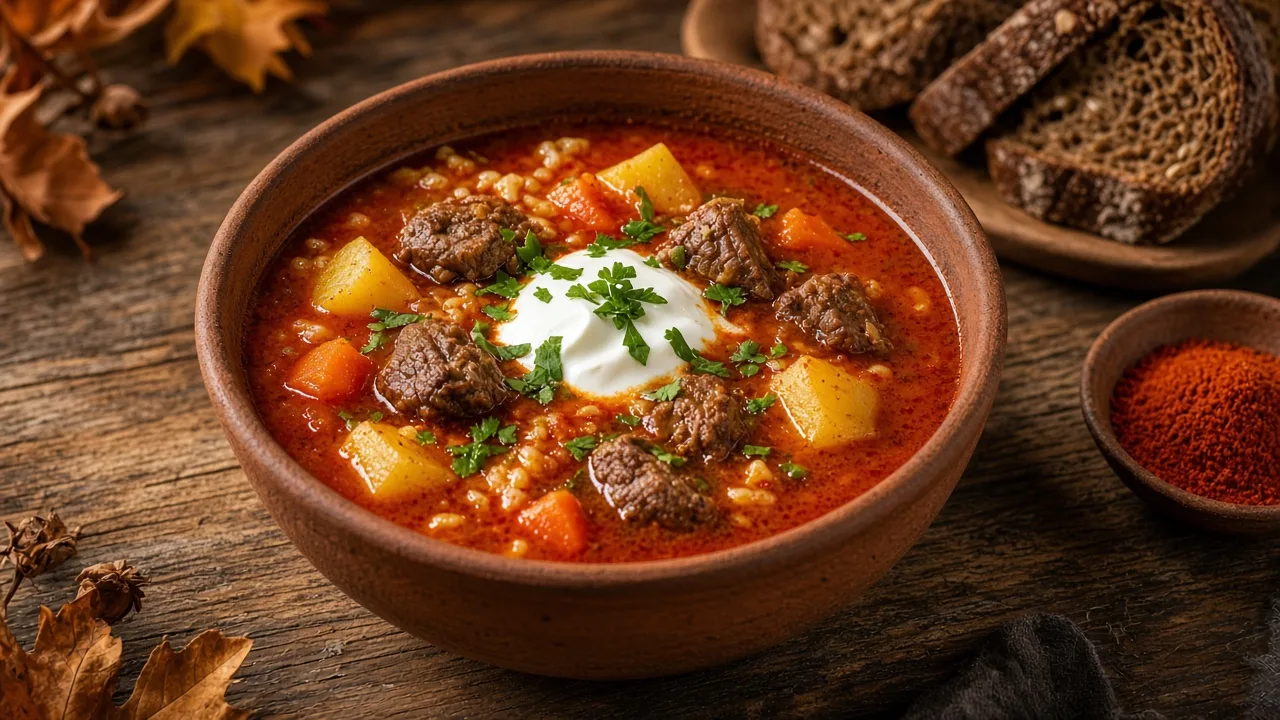
Many people outside Hungary think of goulash as a thick stew, but in Hungary gulyás is usually a hearty soup, rich with beef, potatoes and vegetables. The thicker, stew-like dish is more similar to pörkölt. Both rely on the same foundation: plenty of onions slowly softened in fat, generous sweet paprika, and beef cooked slowly until tender. Good-quality paprika is essential, as it provides both colour and much of the flavour.
Serves: 6 | Prep: 25 minutes | Cook: 2 hours
Ingredients
Goulash
- 2 tbsp lard or neutral oil
- 3 onions, finely chopped
- 1 kg (2.2 lb) beef shin or chuck, cut into 2 cm (¾ in) cubes
- 3 garlic cloves, crushed
- 2 tbsp (about 15 g) Hungarian sweet paprika
- ½ tsp hot paprika (optional)
- 1 tsp caraway seeds, lightly crushed
- 1 tomato, chopped, or 1 tbsp tomato paste
- 1 green or yellow Hungarian wax pepper or bell pepper, sliced
- 2 carrots and 1 parsnip, diced
- 500 g (1.1 lb) waxy potatoes, cut into 2 cm (¾ in) cubes
- 1.5–2 litres (6–8 cups) water or beef stock
- 1 bay leaf
- Salt and black pepper
Csipetke dumplings (optional)
- 1 egg
- 100 g (¾ cup) plain (all-purpose) flour
- Pinch of salt
Method
- Heat the lard or oil in a large heavy pot over medium-low heat. Cook the onions slowly for 10–12 minutes until soft and golden. Do not rush this step.
- Raise the heat, add the beef and cook for about 5 minutes, stirring, until it loses its raw colour on all sides.
- Take the pot off the heat. Stir in the garlic, sweet and hot paprika and caraway. Removing the pot from the heat prevents the paprika from burning and turning bitter.
- Return the pot to the heat and immediately add 500 ml (2 cups) of water, the tomato, the bay leaf and a teaspoon of salt. Cover and simmer gently for about 1 hour, until the beef is starting to become tender.
- Add the carrots, parsnip, pepper and remaining water or stock. Simmer for 20 minutes.
- Add the potatoes and simmer for another 20–25 minutes, until both the beef and vegetables are tender.
- For the csipetke, mix the egg, flour and salt into a firm dough. Pinch off small pieces, about the size of a fingernail, and drop them into the simmering soup for the last 5–8 minutes.
- Taste and season with salt and pepper. Remove the bay leaf and serve hot.
Tips for Success
- Use real Hungarian paprika if you can find it. Sweet, noble sweet (édesnemes) paprika is the classic choice. Avoid smoked paprika, which gives a very different flavour.
- Beef shin and chuck contain connective tissue that breaks down during slow cooking, giving a rich, silky broth. Lean cuts can turn dry.
- Goulash tastes even better the next day, once the flavours have melded.
- Keep the heat low throughout. A gentle simmer gives tender beef and a clear, flavourful broth.
Variations
To make the thicker pörkölt instead, use less liquid, leave out the potatoes and carrots, and serve with nokedli, small Hungarian egg dumplings, or boiled potatoes. Pork, veal or even mushrooms can replace the beef.
Hungarian cooks sometimes stir in a spoonful of lecsó, a stew of peppers and tomatoes, or add a little hot paprika paste called erős pista for extra heat.
How to Serve
Serve goulash in deep bowls with crusty white or rye bread. A dollop of sour cream is not strictly traditional with gulyás, but it is popular. Fresh hot peppers or erős pista on the side let everyone adjust the heat.
For a complete Hungarian meal, follow it with a simple cucumber salad and, for dessert, palacsinta, thin Hungarian pancakes. Goulash keeps well in the fridge for up to three days and also freezes well.