Where Kung Pao Chicken Comes From
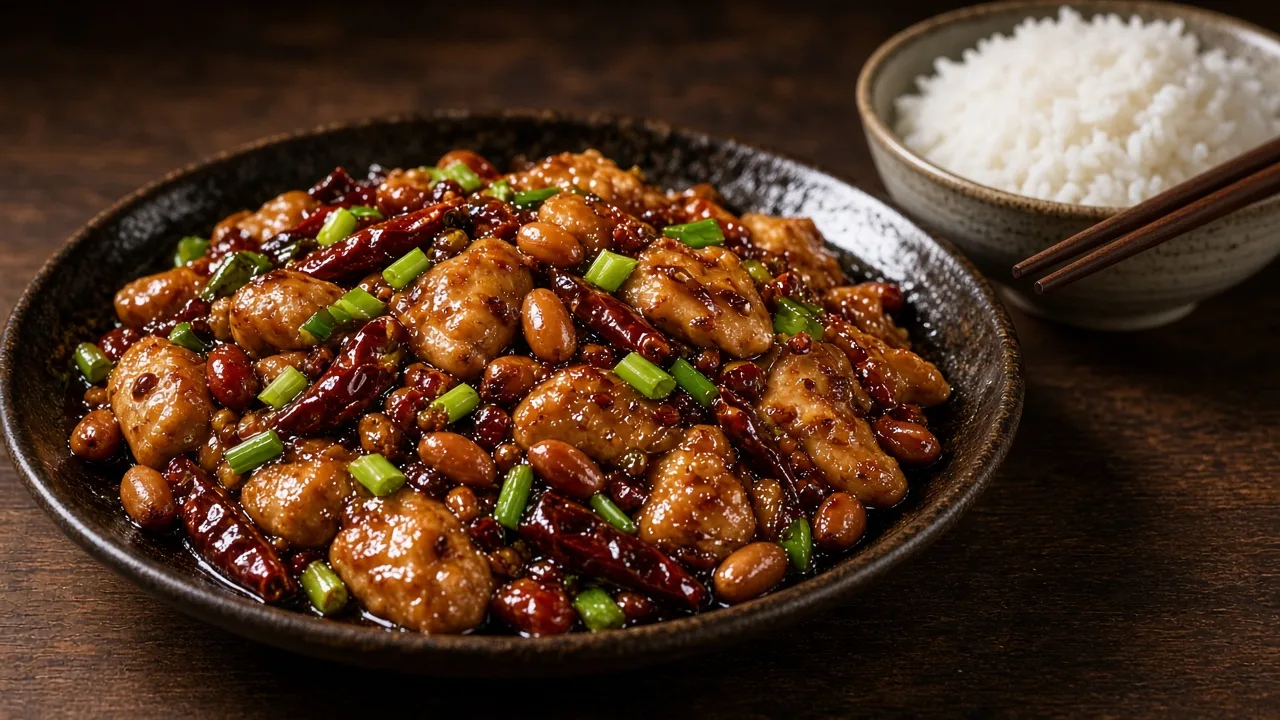
Kung pao chicken, or gōngbǎo jīdīng, comes from Sichuan province in southwest China. It is commonly said to be named after Ding Baozhen, a nineteenth-century governor of Sichuan who held the title gongbao, a palace guardian. According to the usual story, he enjoyed a dish of diced chicken with peanuts and chillies, and it was later named in his honour.
The Sichuan original is very different from the sweet, gloopy versions found in some takeaway restaurants. It has a flavour profile known as hu la, "scorched chilli", which comes from frying dried chillies and Sichuan peppercorns briefly in hot oil until they darken and become fragrant. The sauce is a light coating, balanced between salty, sour and sweet. Combined with the tingling sensation of Sichuan pepper, it makes a vibrant, addictive dish that takes less than half an hour to cook.
Serves: 2–3 with rice | Prep: 20 minutes | Cook: 10 minutes
Ingredients
Chicken and marinade
- 400 g (14 oz) boneless chicken thighs, cut into 1.5 cm (½ in) cubes
- 1 tsp light soy sauce
- 1 tsp Shaoxing rice wine
- 1 tsp cornflour (cornstarch)
- Pinch of salt
Sauce
- 1 tbsp light soy sauce
- 1 tsp dark soy sauce
- 1 tbsp Chinkiang black vinegar
- 1 tbsp sugar
- 1 tsp cornflour (cornstarch)
- 3 tbsp water or chicken stock
Stir-fry
- 2 tbsp neutral oil
- 8–15 dried red chillies, cut in half and seeds shaken out
- 1 tsp Sichuan peppercorns
- 3 garlic cloves, thinly sliced
- 2 cm (¾ in) ginger, thinly sliced
- 4 spring onions, white parts cut into 1.5 cm (½ in) pieces
- 75 g (½ cup) unsalted roasted peanuts
Method
- Mix the chicken with the soy sauce, rice wine, cornflour and salt. Leave for 15 minutes.
- In a small bowl, stir together all the sauce ingredients until the sugar and cornflour dissolve.
- Prepare all the remaining ingredients and place them next to the stove. Stir-frying is fast, so everything must be ready.
- Heat a wok over high heat until smoking, then add the oil. Lower the heat to medium, add the dried chillies and Sichuan peppercorns, and stir for 15–20 seconds until the chillies darken slightly and smell toasty. Do not let them turn black.
- Immediately add the chicken, raise the heat to high and stir-fry for 2–3 minutes until it turns white and is nearly cooked.
- Add the garlic, ginger and spring onions and stir-fry for 30 seconds until fragrant.
- Give the sauce a stir and pour it into the wok. Toss for 30–60 seconds until it thickens and coats the chicken.
- Turn off the heat, stir in the peanuts and serve immediately.
Tips for Success
- Thigh meat stays juicier than breast in a fast stir-fry. If using breast, take care not to overcook it.
- Add peanuts at the very end so they stay crunchy.
- Open a window or turn on the extractor fan; frying dried chillies produces strong fumes.
- Sichuan peppercorns are more fragrant if lightly toasted and ground just before use, though whole ones are traditional in this dish.
- Cut the chicken, spring onions and garlic to similar small sizes so every mouthful has a little of each, which is how the dish is served in Sichuan.
Variations
Use prawns, diced pork or firm tofu instead of chicken. Diced courgette, celery or red pepper can be added for colour and crunch, though they are not part of the classic Sichuan recipe.
Cashews are a common substitute for peanuts. For a milder version, use fewer chillies and skip the Sichuan pepper.
Some cooks add a teaspoon of chilli bean paste (doubanjiang) to the sauce for extra depth, though it is not part of the classic recipe.
How to Serve
Serve kung pao chicken with plain steamed rice, which soaks up the sauce and balances the heat. In a Chinese meal, it would usually be one of several dishes shared at the table, so pair it with something mild, such as stir-fried greens with garlic, a simple egg and tomato stir-fry or smacked cucumber salad.
Tell guests not to eat the whole dried chillies; they are there for flavour and aroma.
Leftovers keep for up to two days in the fridge. Reheat quickly in a hot wok or pan rather than in a microwave, and add a few fresh peanuts to restore some crunch.