Where Chicken Tagine Comes From
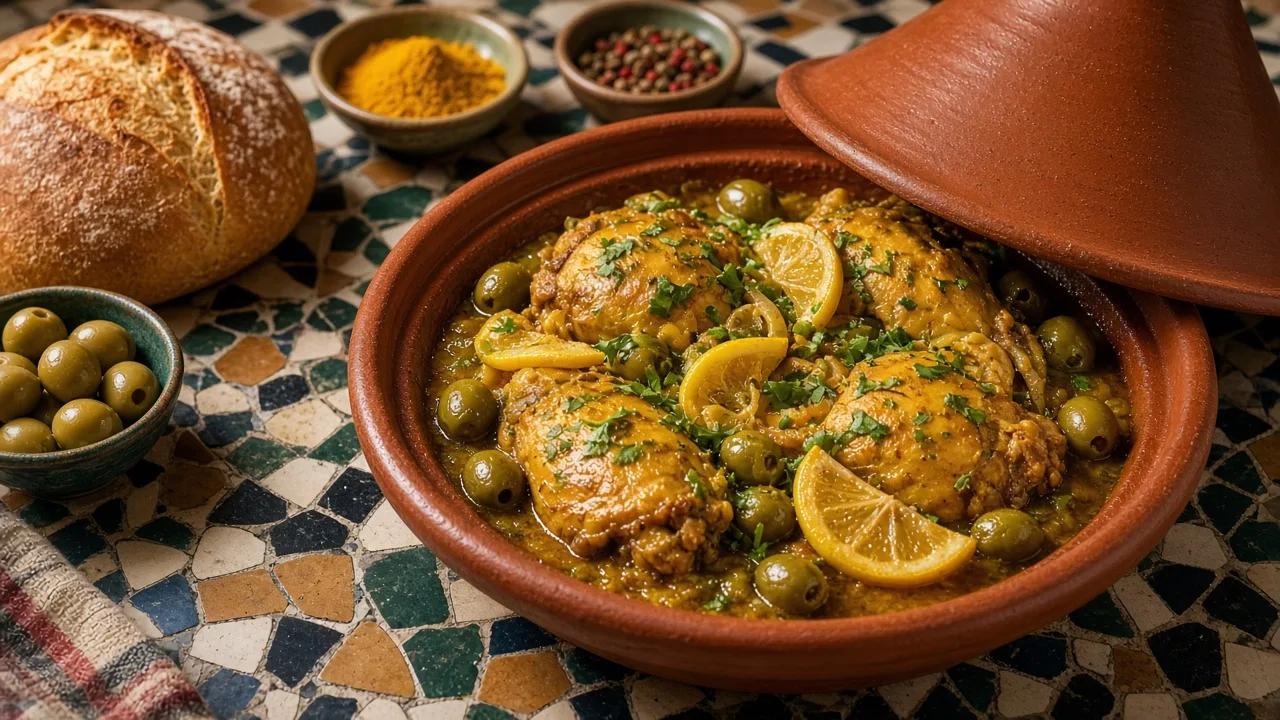
In Morocco, the word tagine refers both to the dish and to the earthenware pot it is cooked in. The pot has a wide, shallow base and a tall conical lid. As food simmers, steam rises into the lid, condenses and drips back down, which keeps the stew moist even with very little liquid. Tagines have been cooked across North Africa for centuries, and the style reflects Amazigh (Berber), Arab and Andalusian influences.
Chicken with preserved lemon and olives, known as djaj mqualli, is one of the best-known Moroccan tagines. Preserved lemons, made by curing lemons in salt and their own juice for several weeks, give a mellow, floral sourness that fresh lemons cannot match. Combined with saffron, ginger and slowly softened onions, they create a golden sauce that is rich without being heavy.
Serves: 4 | Prep: 20 minutes, plus optional 1 hour marinating | Cook: 1 hour 15 minutes
Ingredients
- 1.5 kg (3.3 lb) chicken thighs and drumsticks, skin on
- 2 large onions, 1 grated and 1 thinly sliced
- 4 garlic cloves, crushed
- 1 tsp ground ginger
- 1 tsp ground turmeric
- ½ tsp ground black pepper
- A pinch of saffron threads, soaked in 2 tbsp warm water
- 1 tsp ground cinnamon or 1 small cinnamon stick (optional)
- 3 tbsp (45 ml) olive oil
- 1 tbsp (15 g) butter or smen (preserved butter), optional
- Small bunch each of coriander (cilantro) and flat-leaf parsley, chopped
- 250 ml (1 cup) water or chicken stock
- 1–2 preserved lemons, quartered, pulp removed and rind sliced
- 120 g (¾ cup) green or violet olives
- Salt, to taste
Method
- Mix the grated onion, garlic, ginger, turmeric, pepper, saffron with its soaking water, cinnamon, olive oil and half the herbs in a large bowl. Add the chicken, rub the mixture all over and leave to marinate for at least 30 minutes, or up to overnight in the fridge.
- Spread the sliced onion over the base of a tagine or a heavy, wide pot. Arrange the chicken on top, skin side up, and scrape in all the marinade. Dot with the butter, if using.
- Pour the water or stock around the edges. If you are using a clay tagine, place it on a heat diffuser over low heat; in a regular pot use low to medium-low heat.
- Cover and cook gently for about 50 minutes, turning the chicken once halfway through. The liquid should barely simmer.
- Rinse the olives and add them with the preserved lemon rind. Cook uncovered for 15–20 minutes more, until the chicken is very tender and the sauce has thickened.
- Taste before adding any salt, as both preserved lemon and olives are salty. If the sauce is thin, remove the chicken and simmer the sauce for a few more minutes to reduce it.
- Scatter over the remaining herbs and serve in the pot.
Tips for Success
- If your tagine is clay, soak it in water before first use and always heat it slowly. Sudden temperature changes can crack it.
- A Dutch oven or a heavy, lidded casserole dish gives excellent results if you do not own a tagine.
- Grating one of the onions helps it melt completely into the sauce, giving it body without needing flour.
- Preserved lemons are sold in jars at many supermarkets and Middle Eastern shops. Use only the rind and discard the pulp, which can be bitter.
Variations
Lamb tagine with prunes and toasted almonds is another classic, best cooked for longer, around 2 hours, until the meat falls apart. Vegetable tagines with chickpeas, carrots, courgettes and squash are popular too, often flavoured with ras el hanout, a warm Moroccan spice blend.
If you cannot find preserved lemon, add the finely grated zest of one lemon and a squeeze of juice at the end. It will be brighter and less complex, but still tasty.
How to Serve
In Morocco, a tagine is usually eaten communally from the pot, using pieces of bread to scoop up the meat and sauce rather than cutlery. Khobz, a round, slightly dense Moroccan bread, is ideal, but any crusty bread works.
Couscous is more often served as its own dish in Morocco, but it is a good accompaniment at home. A side of Moroccan carrot salad with cumin and lemon, or a tomato and cucumber salad, adds freshness. Finish with mint tea for an authentic touch.