Where Falafel Comes From
Falafel is eaten all over the Middle East, and several countries consider it part of their national cuisine. It is often thought to have originated in Egypt, where it is called ta'ameya and made with dried fava beans. In Lebanon, Syria, Palestine and neighbouring countries, it is usually made with chickpeas, or a mix of chickpeas and fava beans, and seasoned with plenty of fresh herbs.
The most important rule of good falafel is to use soaked dried chickpeas, not canned ones. Canned chickpeas are already cooked and too soft, so the mixture falls apart in the oil and turns mushy. Raw, soaked chickpeas grind into a coarse mixture that holds together and fries up crisp outside and light and fluffy inside. It requires a little planning, but the hands-on work is easy.
Serves: 4 (about 24 falafel) | Prep: 20 minutes, plus 12–24 hours soaking | Cook: 20 minutes
Ingredients
Falafel
- 250 g (1¼ cups) dried chickpeas
- 1 small onion, roughly chopped
- 4 garlic cloves
- 1 large bunch flat-leaf parsley, about 40 g (1½ oz) leaves
- 1 bunch coriander (cilantro), about 30 g (1 oz) leaves
- 1 green chilli (optional)
- 2 tsp ground cumin
- 1 tsp ground coriander seed
- 1¼ tsp salt
- ½ tsp baking soda
- 1 tbsp sesame seeds (optional)
- Neutral oil for frying, about 1 litre (1 quart)
Tahini sauce
- 90 g (⅓ cup) tahini
- Juice of 1 lemon
- 1 small garlic clove, grated
- 60–90 ml (¼–⅓ cup) cold water
- Pinch of salt
Method
- Cover the chickpeas with plenty of cold water and leave them to soak for 12–24 hours. They will more than double in size. Drain and dry them well.
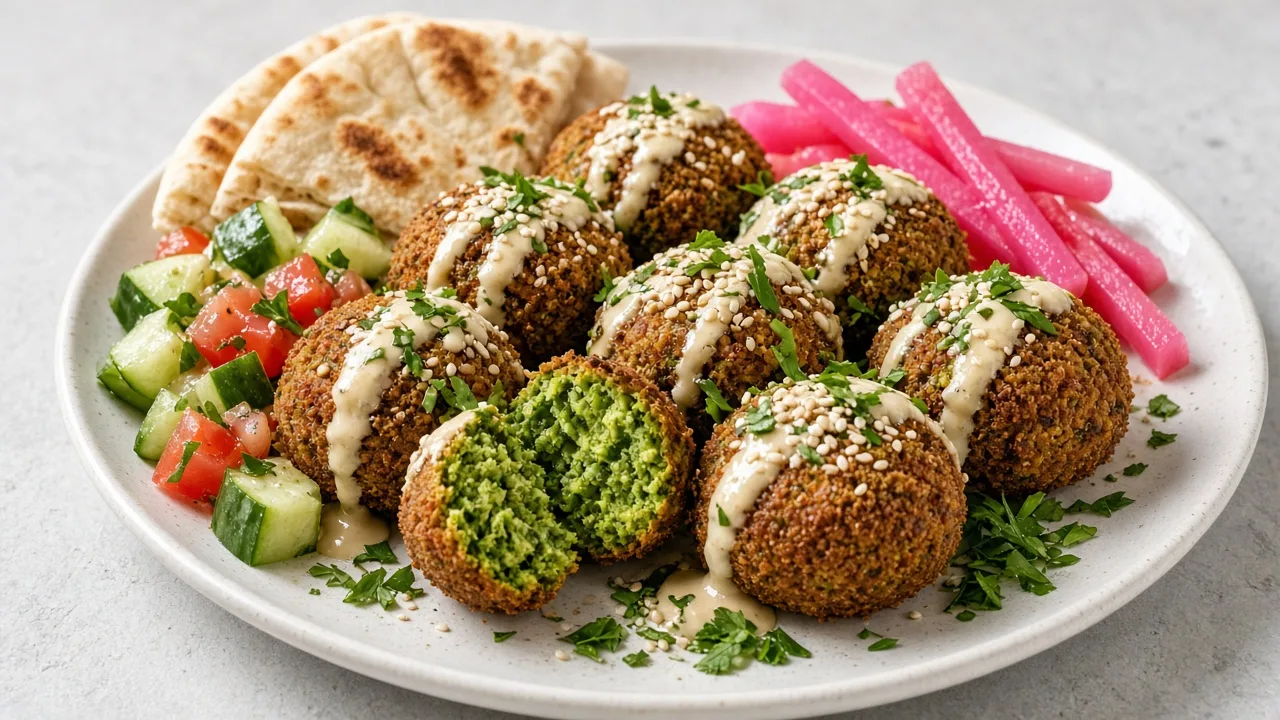
- Put the chickpeas, onion, garlic, herbs and chilli in a food processor. Pulse in short bursts, scraping down the sides, until the mixture looks like coarse, damp sand. Do not turn it into a smooth paste.
- Transfer to a bowl and mix in the cumin, ground coriander and salt. Cover and chill for at least 30 minutes, which helps it hold together.
- Make the tahini sauce by whisking the tahini, lemon juice, garlic and salt. It may seize and thicken at first. Keep adding cold water a spoonful at a time and whisking until smooth and pourable.
- Just before frying, stir the baking soda and sesame seeds into the falafel mixture.
- Heat the oil to 175–180°C (350°F) in a deep pan. Shape the mixture into balls or small patties, about 2 tablespoons each, pressing gently so they hold together.
- Fry in batches for 3–4 minutes, turning, until deep golden brown. Drain on kitchen paper and season with a pinch of salt.
- Serve immediately with the tahini sauce.
Tips for Success
- Test-fry one falafel first. If it falls apart, add 1–2 tablespoons of chickpea flour or plain flour to the mixture and chill it a little longer.
- Keep the oil temperature steady. Oil that is too cool makes falafel greasy, and oil that is too hot browns the outside before the centre cooks.
- A falafel scoop or an ice cream scoop makes shaping fast and gives even sizes.
- The uncooked mixture, without baking soda, freezes well. Thaw it in the fridge before shaping and frying.
Variations
To bake instead of frying, shape patties, brush generously with oil and bake at 200°C (400°F) for 25–30 minutes, turning halfway. They will be less crisp but still very good.
Try the Egyptian approach by using skinned dried fava beans in place of half or all of the chickpeas, for a greener, softer result. Adding a handful of fresh mint or dill also gives a pleasant twist.
How to Serve
The classic way to eat falafel is wrapped in warm pita or flatbread with tahini sauce, tomato, cucumber, lettuce, parsley and pink pickled turnips. Hot sauce or a little amba, a tangy mango pickle, is a popular addition.
For a sharing platter, serve falafel with hummus, tabbouleh, fattoush salad, olives and pickles as part of a mezze spread.
Falafel are at their best eaten fresh from the pan. To reheat leftovers, warm them in an oven at 180°C (350°F) for 8–10 minutes rather than in a microwave, which makes them soft. The tahini sauce keeps in the fridge for up to five days; it will thicken as it sits, so loosen it with a little water before serving.