Where Spaghetti Carbonara Comes From
Carbonara belongs to Rome and the surrounding Lazio region, where it sits alongside cacio e pepe, gricia and amatriciana as one of the city's four great pasta dishes. Its exact origin is debated. Some stories link it to charcoal workers in the Apennine mountains, while others point to the period just after the Second World War, when eggs and cured pork were easy to come by. What everyone agrees on is that the dish is built on a handful of ingredients treated with care.
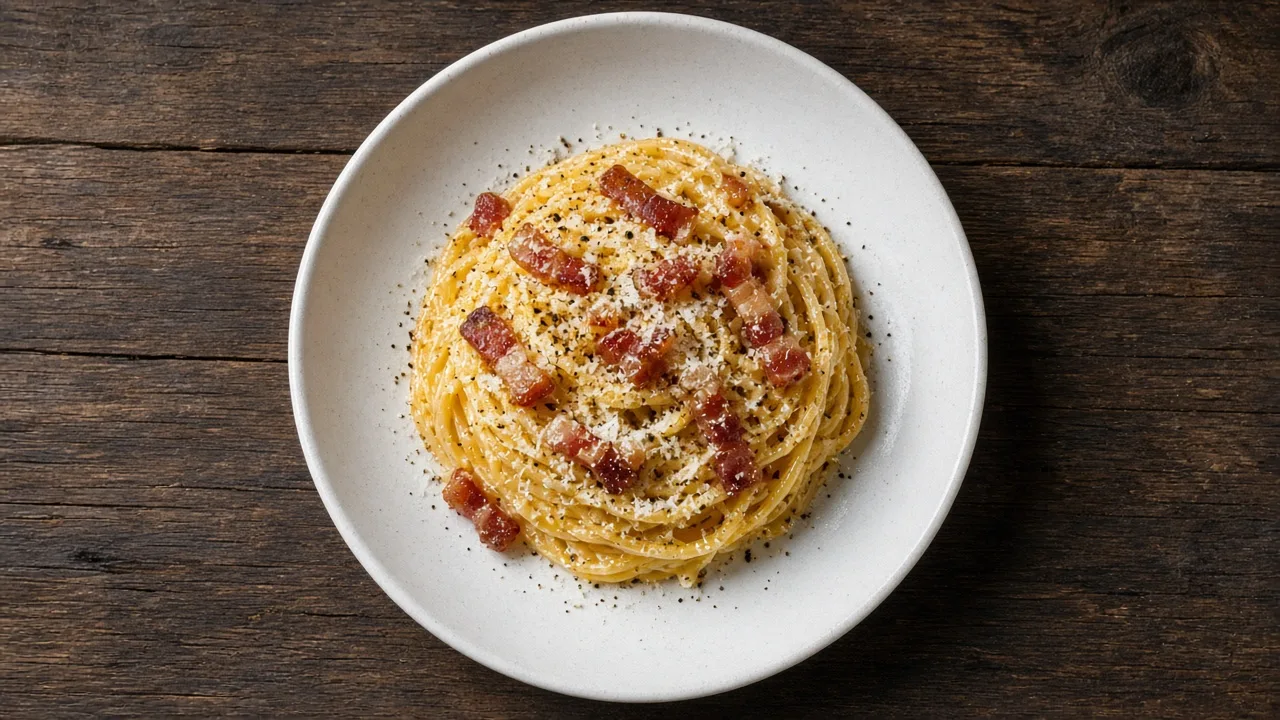
A proper carbonara contains no cream. The sauce gets its velvety texture from egg yolks and grated pecorino romano emulsified with hot, starchy pasta water and the rendered fat of guanciale, a cured pork cheek. The skill lies in using residual heat to thicken the eggs gently, so they turn into a glossy coating rather than scrambled curds. Once you understand that one technique, the recipe takes about twenty minutes from start to finish.
Serves: 4 | Prep: 10 minutes | Cook: 15 minutes
Ingredients
- 400 g (14 oz) spaghetti or rigatoni
- 150 g (5 oz) guanciale, rind removed, cut into thin strips
- 4 large egg yolks plus 1 whole egg
- 80 g (about 1 cup, loosely packed) finely grated pecorino romano, plus extra to serve
- 1–2 tsp freshly and coarsely ground black pepper
- Salt for the pasta water
Method
- Bring a large pot of water to the boil and salt it lightly. Pecorino and guanciale are both salty, so use a little less salt than you normally would.
- Place the guanciale in a cold, wide frying pan and set it over medium-low heat. Let the fat render slowly for 8–10 minutes, stirring occasionally, until the strips are golden and crisp at the edges but still a little chewy in the middle.
- Meanwhile, whisk the yolks, whole egg, pecorino and most of the black pepper in a bowl until you have a thick, paste-like mixture.
- Cook the pasta until it is one minute short of al dente. Before draining, scoop out a mug of the cooking water.
- Turn the heat under the guanciale off. Add the drained pasta to the pan and toss well so every strand is coated in the rendered fat. Let it sit for about 30 seconds so the pan cools slightly.
- Loosen the egg mixture with 2–3 tablespoons of hot pasta water, then pour it over the pasta. Toss and stir quickly and continuously, adding splashes of pasta water as needed, until the sauce turns creamy and clings to the pasta.
- Taste, adjust with more pepper or pecorino, and serve immediately in warm bowls.
Tips for Success
- Work off the heat. If the pan is too hot when the eggs go in, they will scramble. If the sauce looks thin, return the pan to the lowest heat for a few seconds while stirring constantly.
- Grate the cheese as finely as possible, using a microplane if you have one. Coarse shreds clump instead of melting smoothly.
- Toast the black pepper in the pan for a few seconds before adding the pasta to bring out its aroma.
- Pasta water is your control tool: add a little to loosen a thick sauce and keep tossing until it looks glossy.
- Serve carbonara the moment it is ready. It thickens as it stands and does not reheat well.
Variations
If you cannot find guanciale, pancetta is the most common substitute, and thick-cut unsmoked bacon will also work, though it gives a different, smokier flavour. Some cooks prefer a mix of half pecorino and half Parmigiano Reggiano for a milder, nuttier sauce.
Short shapes such as rigatoni or mezze maniche are just as traditional in Rome as spaghetti and hold the sauce well. For a vegetarian version, replace the pork with sautéed mushrooms or courgettes fried in olive oil until golden, and use a vegetarian hard cheese.
How to Serve
Carbonara is rich, so it pairs well with something sharp and fresh. Try a green salad dressed with lemon and olive oil, or bitter leaves such as rocket or radicchio. In Rome, a plate of sautéed greens or artichokes often comes before or after the pasta.
Put extra pecorino and a pepper mill on the table so everyone can season their own plate. A crisp, dry white wine from Lazio such as Frascati is a classic match, while sparkling water with lemon works well if you are not drinking alcohol.