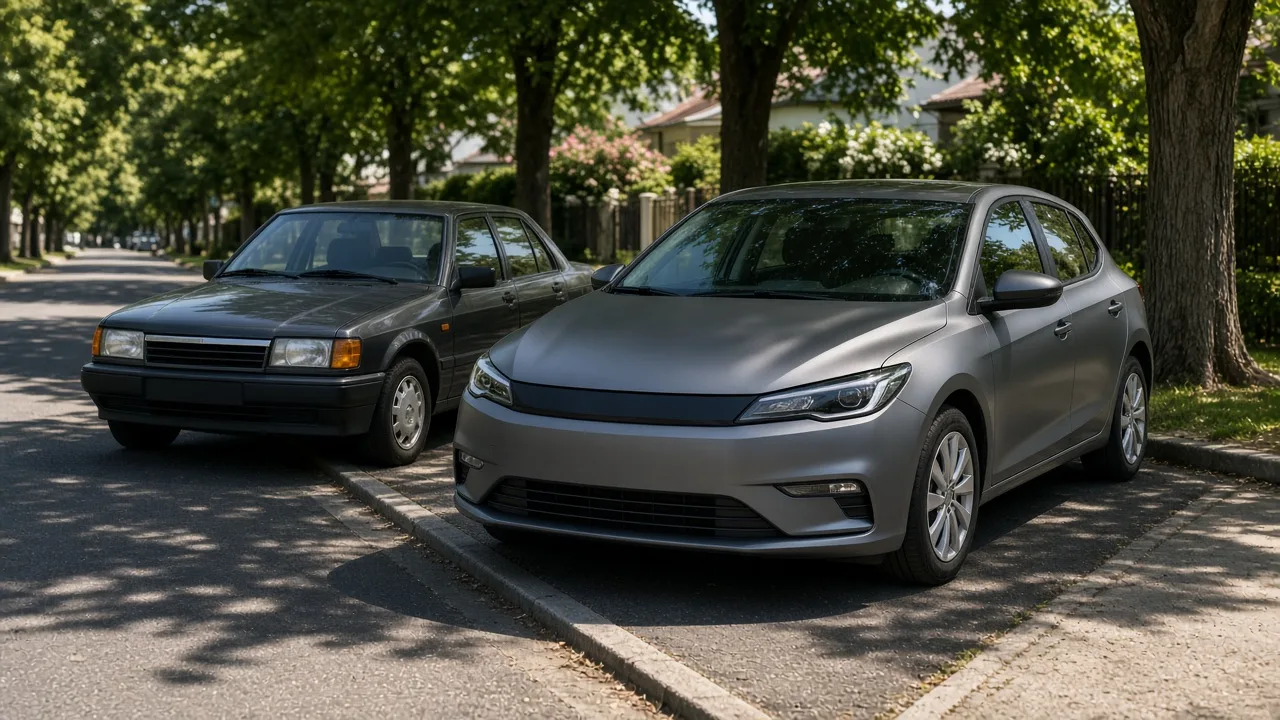
Buying a car is one of the biggest purchases many households make. One of the first choices is whether to buy new or used. Both can be sensible; the right answer depends on your budget, how long you plan to keep the car, how much you drive and how much uncertainty you are comfortable with.
The case for buying new
- Full manufacturer warranty and often free initial services.
- Known history: you are the first owner, with no hidden accidents or neglected maintenance.
- Latest safety and technology, including features such as more airbags, electronic stability control and connected services.
- Easier financing, with more lenders and often promotional schemes.
- Choice of colour, variant and accessories.
The case for buying used
- Lower purchase price for the same model, or a higher segment for the same budget.
- Someone else absorbs the steepest depreciation, which typically happens in the first few years.
- Lower insurance premiums, because insured value is lower.
- Proven models: you can research real-world reliability and common problems.
Depreciation: the hidden cost
A new car loses a significant share of its value in the first few years. If you tend to change cars every three or four years, this loss can be your largest ownership cost. If you plan to keep a car for a decade, depreciation matters less and the benefits of a known history and full warranty matter more.
Reliability and risk
With a used car, the biggest risk is the unknown. A well-maintained three-year-old car with full service records can be an excellent buy; a poorly maintained one can become expensive quickly. Certified pre-owned programmes from dealers offer inspections and limited warranties, at a somewhat higher price than private sales. Always get an independent inspection if you buy privately.
Running costs
Older cars may need replacement parts such as tyres, batteries, brake pads and suspension components sooner. Factor these into your budget. Newer cars may be more fuel-efficient and cheaper to run day to day, but spare parts and repairs for advanced electronics can be costly once the warranty ends.
Financing considerations
Loans for new cars are usually easier to obtain and may carry lower interest rates than used car loans. Compare the total cost of ownership, including interest, rather than just the sticker price. Avoid stretching the loan tenure so long that you owe more than the car is worth for much of the period.
Paperwork and legal checks for used cars
- Verify the registration certificate, insurance and pollution certificate.
- Check that the seller's name matches the registration.
- Confirm there is no outstanding loan, and that any hypothecation has been removed.
- Check for pending traffic challans.
- Complete the ownership transfer formally and promptly.
Questions to ask yourself
- How long do I plan to keep this car?
- How many kilometres do I drive each year?
- How important are the latest safety features and technology to me?
- Can I afford unexpected repairs, or do I need warranty protection?
- Would a used car let me buy a safer or more suitable model?
A middle path
A nearly new car, one to three years old with low mileage and remaining warranty, often offers a good balance: much of the depreciation has already happened, but the car still has modern features and fewer unknowns.
Do not forget insurance and resale
Get insurance quotes for each shortlisted car before deciding, since premiums vary by model and age. Also consider resale value: popular models with good service networks tend to hold their value better, which matters whenever you sell.
Wrapping up
New cars offer certainty, warranty and the latest features at a higher cost; used cars offer value with more risk. Consider how long you will keep the car, inspect carefully, check paperwork and compare total ownership costs before deciding.