The Paris Motor Show has a habit of capturing where the car industry is heading, and the 2026 edition is shaping up to be Europe's biggest show in years, according to Autocar. Walk the halls and three themes stand out: nostalgia-fuelled electric cars, a renewed focus on small and affordable models, and growing confidence from Chinese brands. Here's what matters and why.
Trend one: the retro revival goes electric
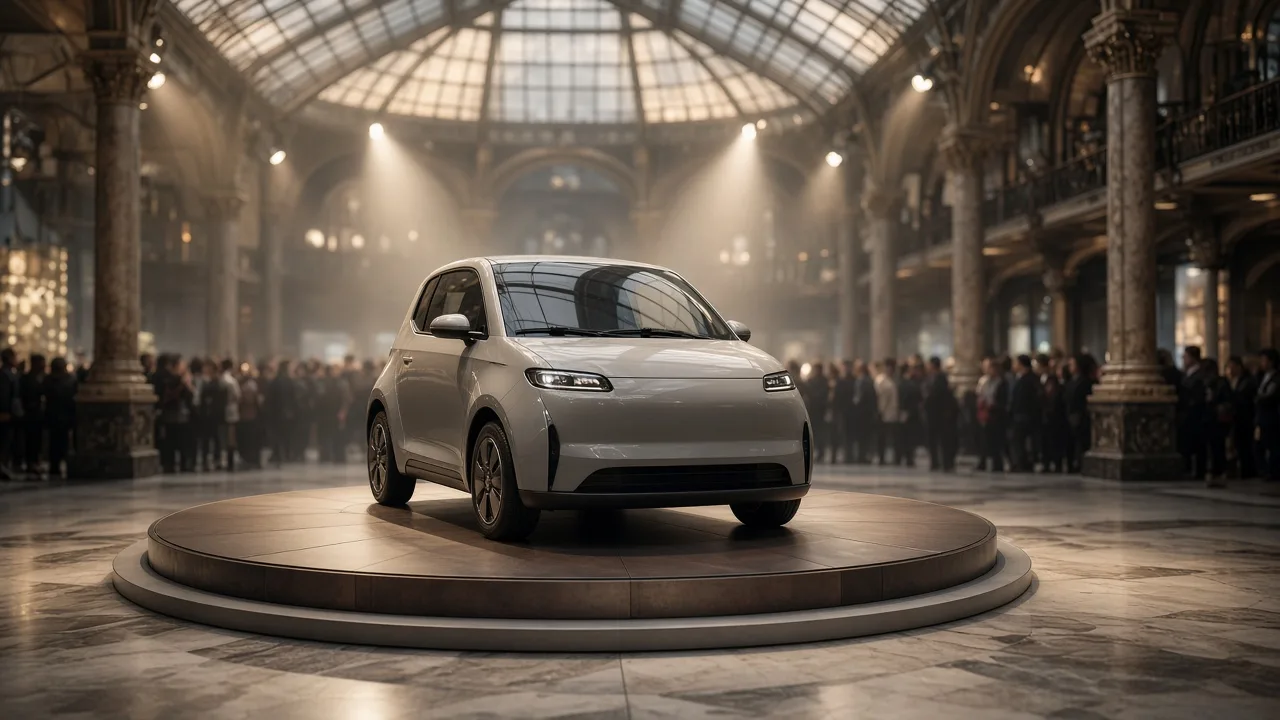
After the success of the reborn Renault 5, other carmakers are mining their back catalogues. The star of the show is the Citroën 2CV, revived as an electric concept. Citroën's chief executive Xavier Chardon said the new "Tin Snail" has "exactly the same purpose" as the post-war original: affordable transport for the masses. Autocar reports it will be built in Italy, with prices promised to start below £15,000. The production version isn't expected until the 2028 Paris show, timed for the original's 80th anniversary. A boxy 2CV Fourgonnette van concept hints at a commercial version too.
Other comebacks include:
- Audi A2 e-tron: the cult-classic supermini returns as an efficiency-focused electric family hatchback with a range of up to 401 miles, making its public debut in Paris.
- Peugeot Vision RCZ: the old coupé reimagined as an electric GT with solid-state batteries and four usable seats, with production plans mentioned.
- Peugeot e-T16: a wild 805bhp, three-motor supermini inspired by Group B rally cars, previewing the next e-208.
- Renault 8 Gordini and Alpine A310 concepts, both reworking classic names for the electric age.
- Renault E-Space concept, which channels the original Espace and could signal a return to people carriers.
Heritage design does a practical job: it makes unfamiliar electric technology feel friendly, familiar and desirable.
Trend two: small cars are back in fashion
For years, the industry chased bigger, pricier SUVs. Paris suggests the pendulum is swinging back. The new Smart #2 replaces the Fortwo as a strictly urban two-seat EV with a tight 6.95m turning circle. The second-generation Dacia Spring, based on the new Renault Twingo and built in Europe rather than China, aims to bring electric motoring to more budgets. Fiat showed both a larger Grizzly SUV, offered with electric, hybrid and petrol power, and a quirky Multiplay concept inspired by the 1990s Multipla.
Trend three: Chinese brands are here to stay
Chinese carmakers are no longer curiosities at European shows. They're core competitors.
- BYD Atto 8: a seven-seat flagship electric SUV with up to 764bhp and a claimed range of more than 400 miles. Autocar reports it works with BYD's new Flash Chargers, topping up from 10–70% in about five minutes.
- Leapmotor B03: a small electric hatchback from the Stellantis-backed brand, whose European sales rose 558% year on year to 56,005 cars in the first half of 2026, according to Europe's car industry body as cited by Autocar.
- Geely Monjaro and Omoda 4: family SUVs and crossovers offering plug-in hybrid, hybrid and electric options at competitive prices.
The mainstream heavy hitters
Not everything was retro or radical. The fifth-generation Hyundai Tucson, one of the world's best-selling cars, arrived with a bold new look and petrol, hybrid and plug-in hybrid options. Volkswagen renamed its facelifted electric SUV the ID. Tiguan, retiring the ID. 4 badge to borrow the strength of one of its best-known nameplates.
Vans go high-tech too
Business buyers had news as well. Renault revealed pricing for the Trafic Van E-Tech electric, recently voted International Van of the Year 2027. It starts at €41,500 with a 60 kWh battery and 350 km WLTP range, or €47,000 with an 81 kWh battery offering 470 km. The van uses an 800V fast-charging architecture and a software-defined vehicle platform.
Why carmakers are betting on character
There's a business logic behind all the nostalgia. Electric powertrains make cars from different brands feel more alike to drive: smooth, quiet and quick off the line. Design and identity become the main ways to stand out. Reviving beloved names gives a new model instant recognition and an emotional pull that a new name has to earn over years. It also helps established European brands defend themselves against newer rivals who can't draw on decades of history. Expect more heritage-inspired electric cars, especially in the small-car segment, where personality has always mattered as much as practicality.
What it means for car buyers
- More affordable EV choice is coming, though several of the cheapest models are still a year or more from showrooms.
- Charging speeds keep improving, which eases one of the biggest worries for EV newcomers.
- Competition is intensifying, especially from Chinese brands, which should help keep prices in check.
- Combustion and hybrids aren't gone. Many new models still offer petrol, hybrid and plug-in hybrid versions alongside fully electric ones.
Concepts versus reality
It's worth separating show-stand dreams from showroom facts. Many headline cars in Paris are concepts or previews. Specifications, prices and launch dates can change before production, and some concepts never reach showrooms. If you're planning a purchase in the next year, focus on models already confirmed for sale in your market and treat the rest as a preview of where things are going.
Visiting a motor show? Make the most of it
If you're heading to a show yourself, arrive early on a weekday to avoid the biggest crowds, sit in the cars you're seriously considering and ask brand staff about real-world range, charging and delivery times for your country. Take photos of spec boards for later comparison, and don't sign anything on the spot.
The takeaway
Paris 2026 tells a clear story. Carmakers are using nostalgia to sell electric technology, shrinking cars back to more sensible sizes and facing serious competition from China. For drivers, that adds up to more choice, more character and, eventually, lower prices.