The first employee you bring on does more than take work off your plate. They set a precedent — for how decisions get made, what "good work" looks like, and whether future hires will want to join. Getting the decision and the process right matters more here than it will for your tenth hire, simply because there is no existing team culture to absorb a bad fit.
Know What You're Actually Hiring For
The most common mistake at this stage is hiring for a job title instead of a problem. Before writing a job description, list the specific tasks eating your time that someone else could do competently within a month of starting. If the list is a scattered mix of customer support, bookkeeping, and social media posts, you likely need a generalist operator, not a specialist. If the list is narrow and deep — writing code, running paid ad campaigns — a specialist makes more sense.
Be honest about urgency versus importance. The task that is loudest right now (an overflowing inbox) is not always the task that most limits growth (nobody following up with warm leads). Hire against the second category when you can.
Employee, Contractor, or Freelancer
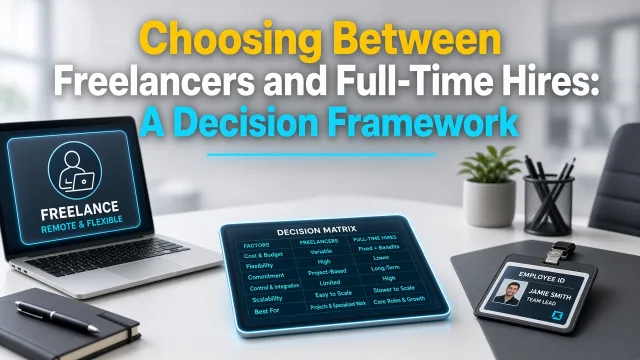
Before hiring, decide what kind of working relationship actually fits the work. This decision has real implications for cost, commitment, and — in most places — legal classification, so treat the table below as a starting framework rather than a final answer for your specific situation.
| Arrangement | Best For | Trade-off |
|---|---|---|
| Full-time employee | Core, ongoing work central to the business | Higher commitment and cost, deeper loyalty and context |
| Part-time employee | Important but not full-time workload | Lower cost, but less availability and focus |
| Freelancer/contractor | Defined projects with a clear scope and end date | Flexible and fast to start, but less embedded in the team |
| Agency | Specialized skills you'll need occasionally, not constantly | Expensive per hour, but no management overhead |
Where to Find Good Candidates on a Small Budget
Your early hires rarely come from expensive job boards. They tend to come from your existing network: people who have worked with you before, customers who love the product enough to want to build it, or referrals from people whose judgment you trust. Be explicit when you ask for referrals — "I need someone who can own customer support end-to-end" gets better results than "do you know anyone looking for work."
When you do post publicly, write the listing in plain language about what the person will actually do in their first month, rather than a generic list of buzzwords. Candidates who are a strong fit for early-stage work tend to self-select based on specifics, not polish.
Running an Interview That Reveals Something Real
Hypothetical questions ("how would you handle a difficult customer?") invite rehearsed answers. Questions about specific past situations reveal more: "tell me about a time a customer was upset — what did you actually say?" Listen for how they describe their own role versus the team's role, and whether they take ownership of outcomes that didn't go well.
For most early roles, a short paid trial project is worth more than another round of interviews. It shows you how someone actually works — communication style, independence, quality under a real deadline — in a way conversation cannot.
The Paperwork and Onboarding Basics
Requirements vary widely depending on where you and your hire are located, so treat this as a general checklist rather than specific guidance for your jurisdiction. At minimum, plan for: a written offer stating pay, hours, and start date; a clear agreement on confidentiality and ownership of work product; and a straightforward process for payroll or invoicing and any required tax registrations. When in doubt about local requirements, a short paid consultation with an accountant or employment professional is far cheaper than fixing a mistake later.
Onboarding deserves more thought than most founders give it. A first week with a clear plan — who to meet, what to read, one small task to complete and present back — makes a new hire productive faster and signals that the business is organized, even when nothing else is.
Your first hire learns what "normal" looks like here by watching you, not by reading a handbook.
Next Steps
Write down the specific tasks you want off your plate and sort them by importance, not urgency. Decide whether the work fits an employee, contractor, or freelancer arrangement. Draft a plain-language job description built around real first-month tasks, ask your network directly for referrals, and build a simple first-week onboarding plan before the offer is even signed.