For many of us, a Sunday champi from a mother or grandmother is a cherished childhood memory. Hair oiling remains one of the most loved beauty rituals in Indian homes. Done well, it can soften hair, reduce dryness and make the scalp feel cared for. Done poorly, with heavy oil left on for days, it can leave hair greasy and the scalp unhappy. Here is how to get it right.
What hair oiling can and cannot do
Oiling can help hair look smoother and shinier, reduce frizz and protect lengths from dryness and friction, particularly during washing. A gentle scalp massage also feels relaxing. However, oil cannot repair split ends permanently or guarantee faster hair growth. Hair loss can have many causes, from stress and nutrition to medical conditions, so oil alone is not a solution for it.
Choosing an oil for your hair
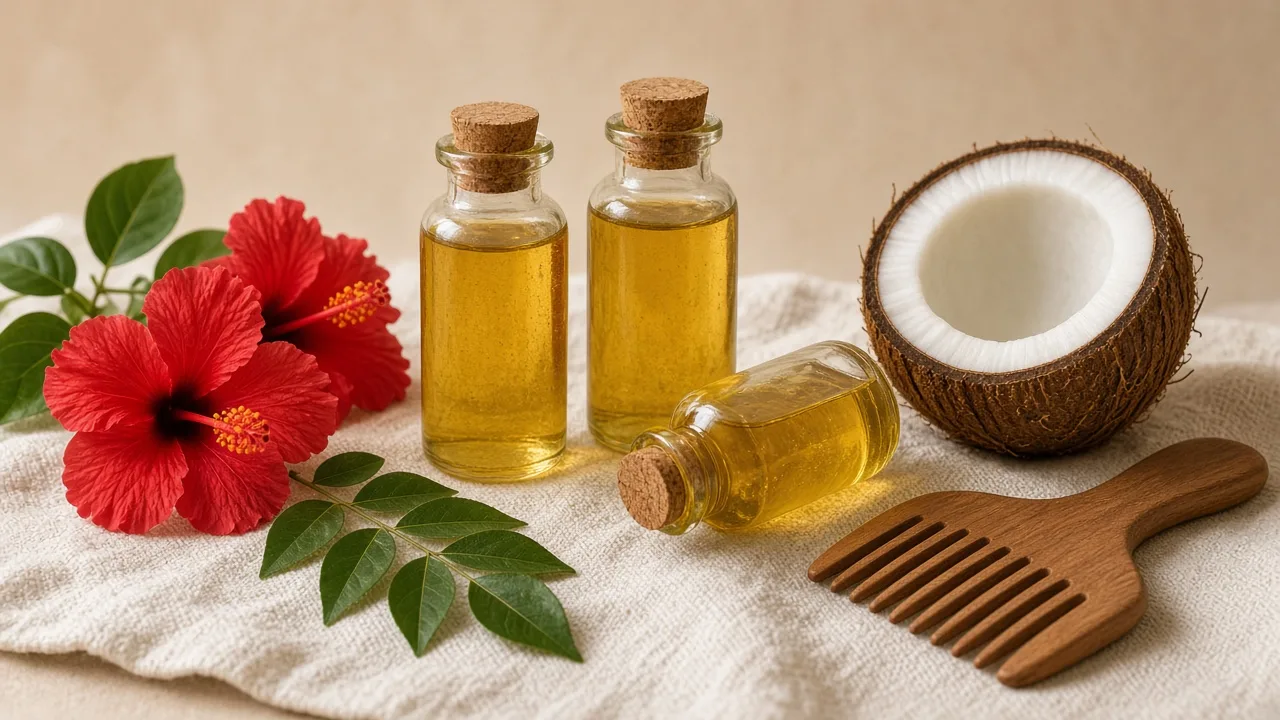
- Coconut oil: A popular choice that is believed to reduce protein loss during washing. Good for most hair types, though it solidifies in cold weather.
- Sesame (til) oil: Slightly heavier and warming; traditionally used in many South Indian homes.
- Almond oil: Light and suitable for fine or dry hair.
- Mustard oil: Thick with a strong smell; some people love it, especially in North India.
- Argan or jojoba oil: Lightweight options for finishing or for those who dislike heavy oils.
If your hair is fine or your scalp is oily, choose lighter oils and use less. Thick, curly or very dry hair can usually handle richer oils.
How to oil your hair
- Detangle first. Gently comb hair with a wide-tooth comb before applying oil.
- Warm the oil slightly. Place the bottle in a bowl of warm water. It should feel comfortably warm, never hot.
- Section your hair. Part it into four or more sections for even coverage.
- Apply to the scalp sparingly. Use your fingertips, not nails, and massage in small circular motions for five to ten minutes.
- Work oil into the lengths and ends, where hair tends to be driest.
- Tie hair loosely in a braid or bun to avoid tangles.
How long to leave it on
For most people, 30 minutes to two hours before washing is plenty. Some prefer to leave oil overnight, which can suit very dry hair, but use an old pillowcase. Avoid leaving oil in for several days, as it can attract dirt, build up on the scalp and may worsen dandruff for some people.
Washing it out properly
- Apply shampoo to the scalp first, before wetting hair completely, to help break down the oil.
- Massage gently and rinse with lukewarm water.
- Shampoo a second time if hair still feels greasy.
- Use conditioner on the lengths only.
- Avoid very hot water, which can dry the scalp.
How often should you oil?
Once or twice a week works well for most people. If you have an oily scalp, oil only the lengths or reduce frequency. For dry, curly or chemically treated hair, more regular oiling of the lengths may help.
When to skip oiling
- Dandruff or flaky scalp: Some types of dandruff can worsen with oil on the scalp. Focus oil on the lengths.
- Scalp infections, acne or irritation: Avoid oiling until the scalp has settled.
- Very oily scalp: Oil the lengths only, or use a light serum.
Add-ins from the kitchen
Many households infuse oil with curry leaves, fenugreek seeds or hibiscus flowers by gently heating them together and straining. These traditional infusions are enjoyable to make. Always patch test anything new and avoid heating the oil too much.
Make it a relaxing ritual
Hair oiling is as much about self-care as hair care. Put on some music, take your time with the massage and enjoy a slow morning before washing. Done mindfully, it can be a small weekly pause in a busy life.
Note: This article offers general guidance only; if you have persistent hair fall, dandruff or scalp problems, please consult a dermatologist.