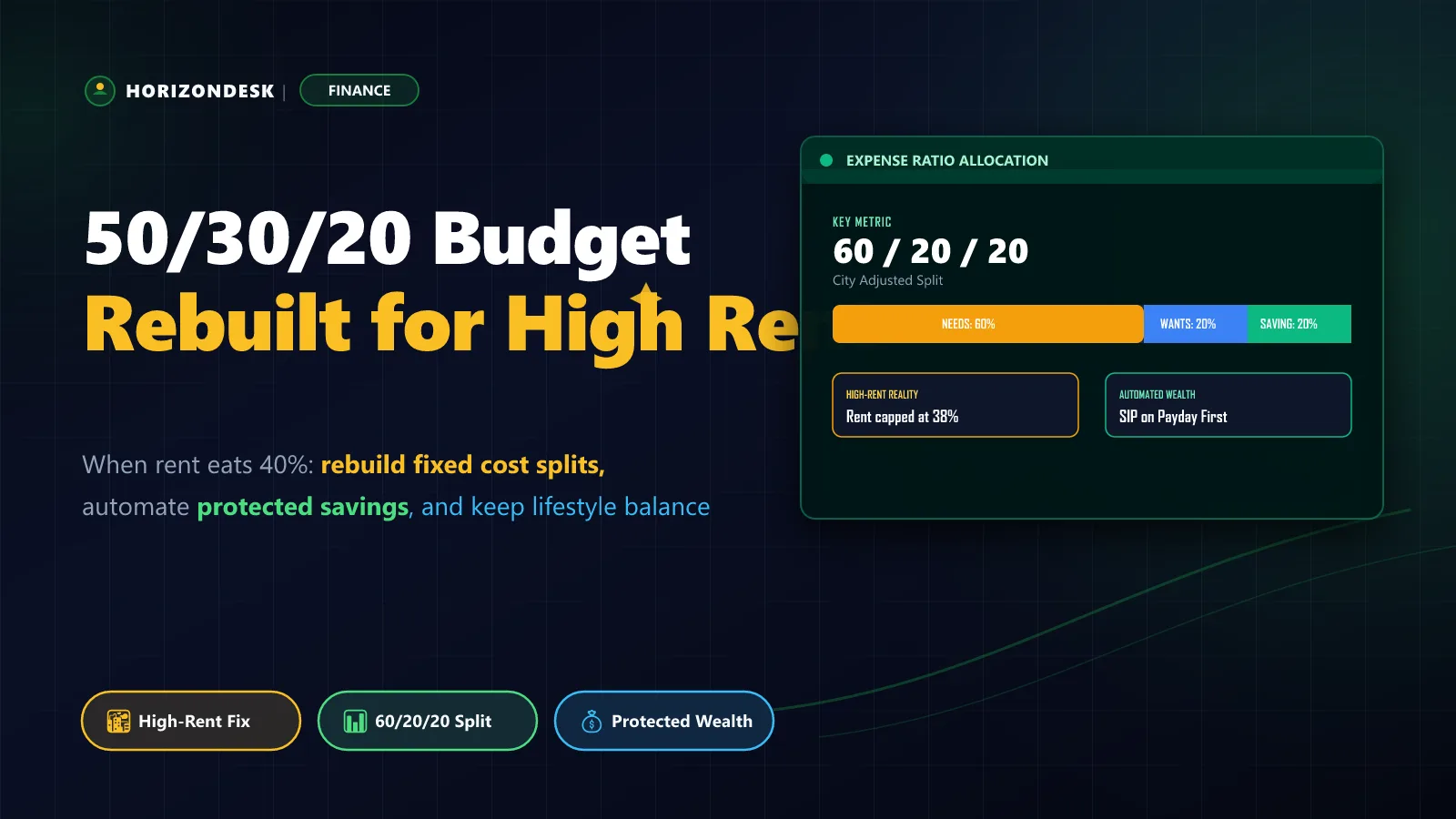
The 50/30/20 rule is beautifully simple: half your take-home pay goes to needs, 30% to wants and 20% to savings. It was designed for a world where housing took a manageable slice of income. In Mumbai, Bengaluru, London or San Francisco, rent alone can swallow 35–45% of a salary before you've bought a single grocery, and the neat split collapses.
The answer isn't to abandon budgeting. It's to keep the spirit of the rule — protect savings, cap the essentials, leave room to enjoy life — and change the numbers to match reality.
Why the classic split fails when rent is high
Say you take home ₹1,00,000 a month and pay ₹38,000 in rent. Under 50/30/20, all your needs must fit in ₹50,000. After rent, that leaves ₹12,000 for groceries, electricity, internet, commuting, insurance premiums and any loan EMIs. For most people that's impossible.
So what happens in practice? "Needs" quietly borrow from the savings bucket, and the 20% becomes whatever is left on the last day of the month — which is usually nothing. The rule hasn't been followed or broken; it has simply stopped being useful.
The deeper problem is that the rule treats housing like any other need. It isn't. Rent is large, fixed for a year at a time and expensive to change. It deserves its own line.
The rebuilt framework: Housing, Essentials, Future, Life
Instead of three buckets, use four:
- Housing (30–40%): rent, maintenance charges, society fees and the deposit you're paying back if you borrowed it.
- Essentials (15–20%): groceries, utilities, phone and internet, commuting, insurance premiums and minimum debt payments.
- Future (15–20%): emergency fund, retirement and goal-based investments. This bucket has a floor of 15%.
- Life (the remainder, usually 20–30%): eating out, travel, shopping, subscriptions and gifts.
Here's how that plays out for two example earners, one in India and one in a high-rent Western city:
| Bucket | Classic rule | Example: ₹1,00,000 take-home | Example: $5,000 take-home |
|---|---|---|---|
| Housing | Part of 50% needs | ₹38,000 (38%) | $1,900 (38%) |
| Essentials | Part of 50% needs | ₹17,000 (17%) | $850 (17%) |
| Future | 20% | ₹17,000 (17%) | $850 (17%) |
| Life | 30% | ₹28,000 (28%) | $1,400 (28%) |
Savings dropped from 20% to 17%, and lifestyle spending gave up two points. That's an honest trade-off you can live with, instead of a target you miss every month.
Savings is the one category that should never be "whatever is left".
How to make the numbers work
Pay your future self first — automatically
Schedule your SIPs, recurring deposits or transfers for the day after salary arrives. Money that never reaches your spending account is money you don't miss. If you wait until month-end to save, you're relying on willpower against every sale, dinner invitation and app notification.
Treat rent as a decision, not a fact
If housing stays above 40% for more than a year, revisit it at renewal time. Options include sharing with a flatmate, moving one or two metro stops further out, or negotiating the increase. Do the commute maths honestly: a ₹8,000 cheaper flat that adds ₹3,000 in cabs and an hour a day may not be a win.
Squeeze essentials once, properly
Once a year, review your phone plan, insurance premiums, electricity usage and any subscriptions that crept into the essentials bucket. Small savings here are permanent because they recur every month without further effort.
When to bend your own rules
- Your first job in a new city: the deposit, furniture and setup costs are real. Aim for 10% savings for the first six months, focused on an emergency fund.
- High-interest debt: if you carry credit card balances, the Future bucket goes to paying them down first. No investment reliably beats the interest those cards charge.
- Saving for a home down payment: temporarily shrink Life and push Future towards 25–30% for a defined period — and write the end date down.
A budget is a tool, not a moral code. The best one is the version you'll actually follow next month, and the month after that. Rebuild the rule around your real rent, protect the Future bucket, and let everything else flex.