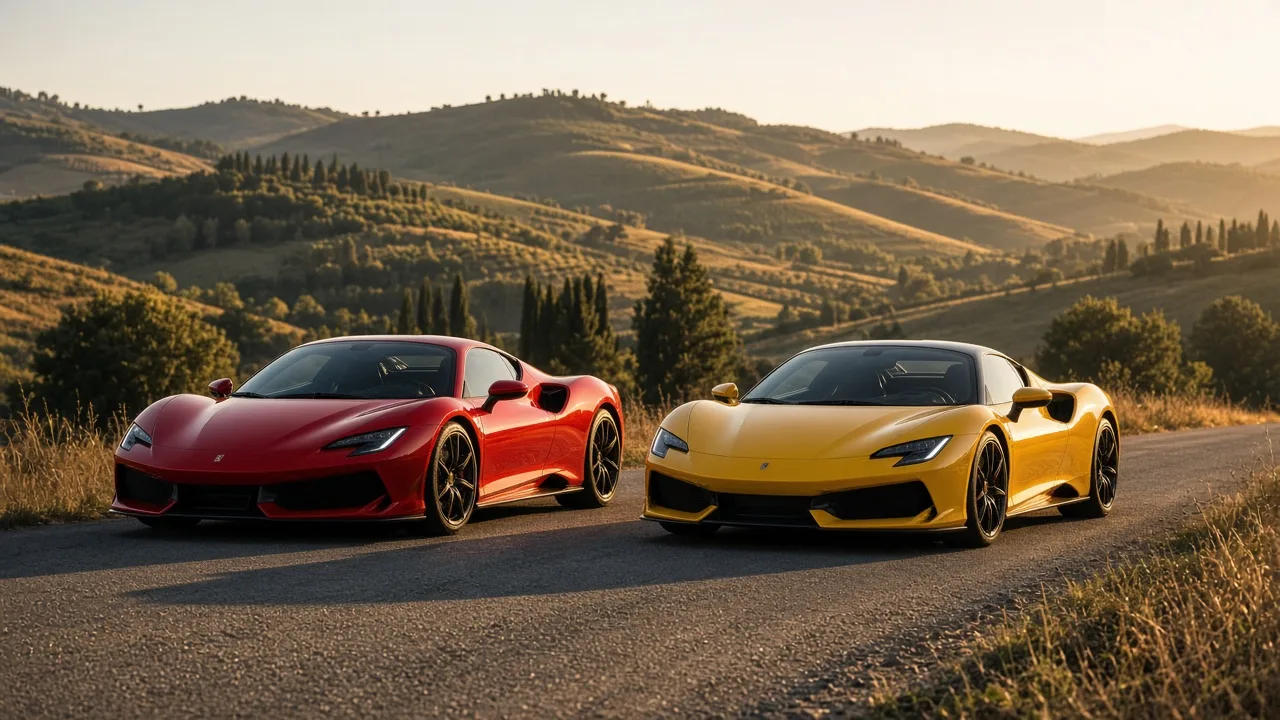
Few rivalries in the car world are as colourful as the one between Ferrari and Lamborghini. Both were born in the same small corner of northern Italy, both are built around high-revving engines and dramatic design, and both have spent decades trying to outdo each other. Yet their stories began very differently: one with a racing team, the other with a tractor factory.
Ferrari: from racing team to car maker
Enzo Ferrari began as a racing driver and became a team manager. In 1929 he founded Scuderia Ferrari in Modena, a team that for years raced Alfa Romeo cars and adopted the now-famous prancing horse emblem. After splitting with Alfa Romeo, Enzo set up his own engineering business, and after the Second World War he moved to build cars under his own name in Maranello.
The first car to carry the Ferrari badge was the 125 S. According to Ferrari's own history, its 1.5-litre V12, designed by Gioacchino Colombo, fired up for the first time on 12 March 1947. The car made its racing debut at Piacenza on 11 May 1947, where Franco Cortese was leading before a fuel-pump failure forced him out. Enzo called it "a promising failure." Only days later, in May 1947, Cortese won the Rome Grand Prix, the first of several victories for the 125 S that year.
Lamborghini: from tractors to supercars
Ferruccio Lamborghini, born in 1916 near Ferrara, trained as a mechanic. After the war he built a successful business converting surplus military machinery into tractors, and Lamborghini Trattori became one of Italy's leading tractor makers. He later expanded into heating and air-conditioning equipment, and his wealth allowed him to own a garage full of sports cars.
Automobili Lamborghini was established on 7 May 1963 in Sant'Agata Bolognese, not far from Maranello. That October, the 350 GTV prototype debuted at the Turin Motor Show, with a V12 engine designed by former Ferrari engineer Giotto Bizzarrini. Popular lore says the show car had no working engine in its bay at the time. The refined production model, the 350 GT, was presented at the 1964 Geneva Motor Show.
The rivalry and the clutch legend
The most famous story about Lamborghini's origins is, as it is often told, a tale of a broken clutch. Ferruccio, the story goes, owned Ferraris and was unhappy with their clutches, which he found troublesome. When he went to Maranello to complain, Enzo Ferrari is said to have dismissed him with a remark along the lines of: a tractor maker should stick to tractors. Stung, Ferruccio decided to build a better grand tourer himself.
The anecdote has been repeated so often that it has become part of the brand's mythology. But details vary from version to version, and it is best treated as a legend that captures the spirit of the rivalry rather than a precisely documented conversation. What is clear is that Lamborghini set out to build refined, powerful GT cars in direct competition with Ferrari, and the two brands have been compared ever since.
Iconic models
Each marque has produced cars that defined their eras:
- Ferrari 250 GTO (1962-1964): a front-engined V12 racer built in tiny numbers (around three dozen cars). Today it is among the most valuable collector cars in the world.
- Ferrari F40 (1987): created for the company's 40th anniversary, a raw, turbocharged supercar widely remembered as the last new model launched under Enzo Ferrari, who died in 1988.
- LaFerrari (2013): Ferrari's first hybrid road car, pairing a V12 with an electric motor and built in a limited run of 499 coupes.
- Lamborghini Miura (1966): its mid-mounted, transverse V12 brought racing-car layout to the road and is often credited with popularising the modern "supercar" idea.
- Lamborghini Countach: shown as a prototype in 1971 and produced from 1974, its wedge shape and scissor doors became a poster-wall icon.
- Lamborghini Aventador (2011): a carbon-fibre V12 flagship that carried the naturally aspirated V12 tradition through the 2010s.
- Lamborghini Revuelto (2023): the brand's first V12 plug-in hybrid, with a combined output of just over 1,000 hp.
Racing: Ferrari's Formula 1 legacy
Racing has always been central to Ferrari. Scuderia Ferrari has competed in the Formula 1 World Championship since its first season in 1950, making it the sport's oldest and most successful team. It holds records of 16 Constructors' Championships and 15 Drivers' Championships, with champions including Alberto Ascari, Niki Lauda, Michael Schumacher and Kimi Raikkonen; its most recent constructors' title came in 2008. In 2026 the team races with Charles Leclerc and Lewis Hamilton. Lamborghini, by contrast, built its reputation mainly on road cars.
Changing ownership
Ferrari's road-car business needed outside support as costs grew. Fiat bought a 50% stake in 1969 and raised it to 90% in 1988. Decades later, Fiat Chrysler Automobiles took Ferrari public: its shares began trading on the New York Stock Exchange on 21 October 2015 under the ticker RACE, and the separation from FCA was completed in early January 2016. Ferrari has been an independent listed company since.
Lamborghini's path was bumpier. After financial troubles in the 1970s, the company passed through several owners. Chrysler bought it in 1987 and oversaw the Diablo, then sold it in 1994 to Indonesian-led investors. In 1998, Audi, part of the Volkswagen Group, acquired Lamborghini, giving it the financial and technical stability it had long lacked.
Where they are today: different paths to electrification
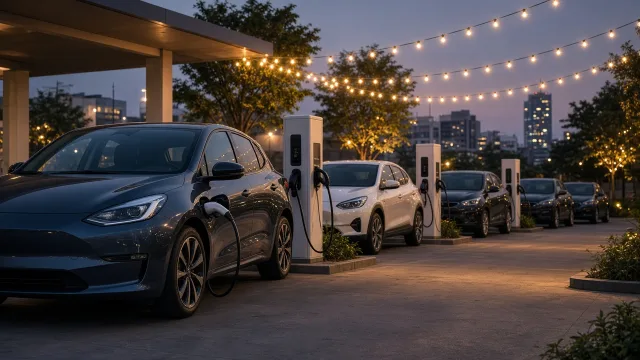
Both brands are now electrifying, but at different speeds. Ferrari calls its approach "multi-energy": petrol, hybrid and, now, fully electric cars side by side. In October 2025 it revealed the technology of its first full-electric car, then known as the Ferrari Elettrica. The interior and the name, Ferrari Luce, followed in February 2026, and the complete car was unveiled in Rome in May 2026. Reuters reported that it is a four-door, five-seat model priced around 550,000 euros, with deliveries planned to begin in the fourth quarter of 2026.
Lamborghini has taken the hybrid route instead. Its current line-up, the Revuelto, the Temerario and the Urus SE, is fully plug-in hybrid. In early 2026, chief executive Stephan Winkelmann said the company had dropped plans for an all-electric Lanzador, citing weak demand among its customers, and that the model would arrive as a plug-in hybrid. Lamborghini has said a fully electric car is still being studied, but likely not before 2030.
More than six decades after the clutch story first did the rounds, the rivalry is still alive. It now plays out in batteries and electric motors as well as in V12 sound and lap times.
Sources
- Ferrari: 125 S history
- Ferrari: Ferrari Elettrica (October 2025)
- Ferrari: Ferrari Luce interior and name reveal (February 2026)
- Reuters: Ferrari bets on generational tech shift with Luce five-seat EV
- Lamborghini: Milestones
- Volkswagen Group: The history of Lamborghini
- SEC filing: FCA announces closing of Ferrari IPO
- AP News: Ferrari goes public
- Car and Driver: Lamborghini cancels first EV, Lanzador to become a plug-in hybrid
- Autocar: Electric Lamborghini still planned despite Lanzador going PHEV
- Formula 1: Ferrari team profile