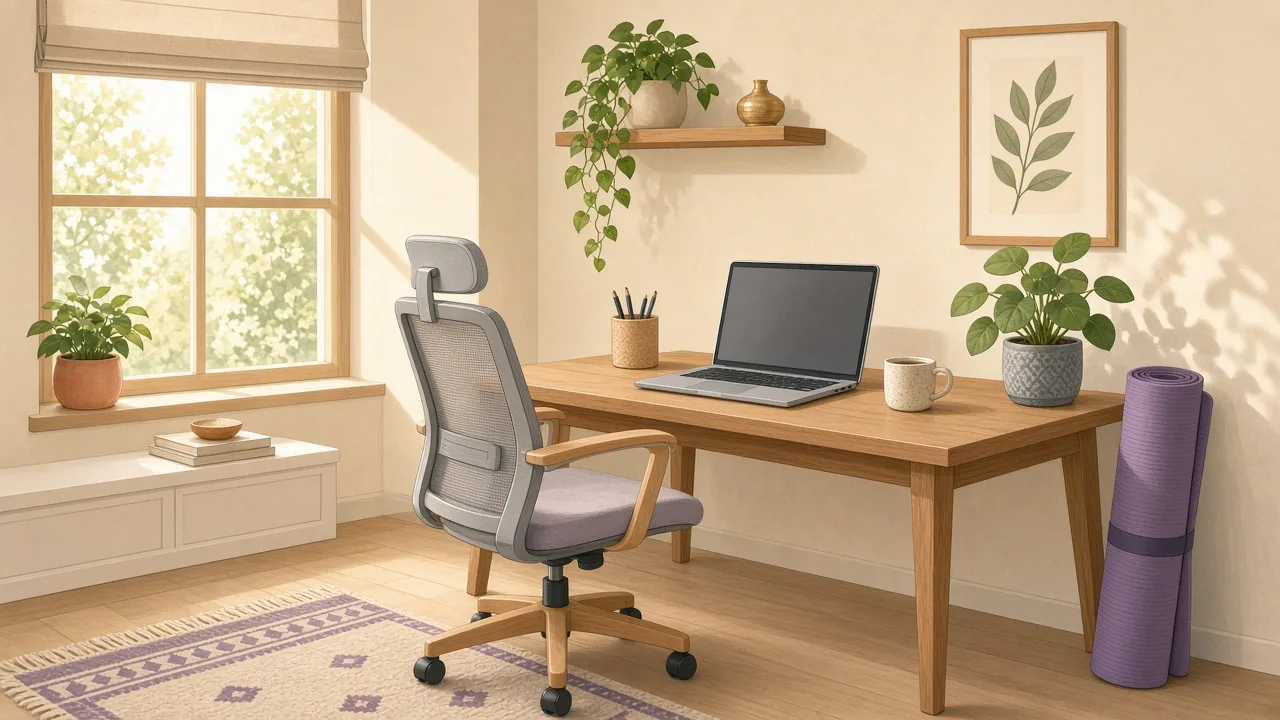
Long hours at a desk have become normal for many of us, whether in an office, a co-working space or a corner of the living room. Unfortunately, our bodies were not designed to stay hunched over a screen for eight or ten hours. Stiff necks, tight shoulders and a dull ache in the lower back are common complaints. A few small changes to your setup and some easy stretches can make a noticeable difference.
Why sitting causes stiffness
When we sit for long periods, certain muscles stay shortened while others are stretched and weakened. Leaning towards a laptop pushes the head forward, which increases the load on the neck. Slouching rounds the upper back, and sitting without support can strain the lower back. The problem is less about sitting itself and more about sitting still in one position for too long.
Fix your workstation first
Stretching helps, but a poor setup will keep undoing your efforts.
- Raise your screen. The top of your monitor should be roughly at eye level. If you use a laptop, place it on a stand or a stack of books and use a separate keyboard and mouse.
- Support your back. Sit all the way back in your chair. A small cushion or rolled towel behind the lower back can help.
- Keep feet flat. Use a footrest or a sturdy box if your feet do not reach the floor comfortably.
- Relax your shoulders. Elbows should rest close to your body at about a right angle while typing.
- Avoid working from the bed or sofa for long stretches, as these offer little support.
Take movement breaks
The simplest habit is to change position often. Aim to stand up and move for a couple of minutes every 30 to 45 minutes.
- Walk to refill your water bottle.
- Take phone calls standing or pacing.
- Use the stairs instead of the lift for short trips.
- Stand up while waiting for files to load or meetings to start.
Easy stretches you can do at your desk
Move slowly and gently. Stretching should feel like mild tension, never sharp pain. Hold each stretch for about 15 to 30 seconds and breathe normally.
- Chin tucks: Sit tall and gently draw your chin straight back, as if making a double chin. Hold for a few seconds and release. Repeat five to ten times. This counteracts the forward-head posture.
- Neck side stretch: Tilt your right ear towards your right shoulder without lifting the shoulder. Hold, then switch sides.
- Shoulder rolls: Roll your shoulders up, back and down in slow circles ten times, then reverse.
- Chest opener: Clasp your hands behind your back, straighten your arms gently and lift your chest. This helps undo rounded shoulders.
- Seated twist: Sit tall, place your right hand on the back of the chair and gently rotate your upper body to the right. Hold, then switch.
- Seated forward fold: Sit near the edge of your chair, feet apart, and slowly fold forward to let your arms and head hang. Roll back up slowly.
- Standing hip flexor stretch: Stand and take a step back with one leg, bending the front knee slightly while keeping your torso upright. You should feel a stretch at the front of the back hip.
- Wrist stretch: Extend one arm with the palm up and gently pull the fingers back with the other hand. Then turn the palm down and repeat.
Build strength outside work hours
Stretching relieves tension, but stronger muscles support good posture through the day. Regular walking, yoga, swimming or simple bodyweight exercises such as bridges, planks and wall push-ups can all help. Even 20 to 30 minutes on most days makes a difference over time.
Look after your eyes too
Screen-heavy days often bring eye strain, which makes us lean in and tense up. Try the 20-20-20 habit: every 20 minutes, look at something about 20 feet away for 20 seconds. Adjust screen brightness to match the room and keep the screen at arm's length.
Make it a habit
Pick three stretches you like and tie them to a routine, such as before your first meeting, after lunch and before logging off. A sticky note or a calendar reminder can help in the early weeks. Consistency matters far more than doing a long session once a week.
Note: This article offers general guidance only; if you have persistent pain, numbness, tingling or a past injury, please consult a doctor or physiotherapist.