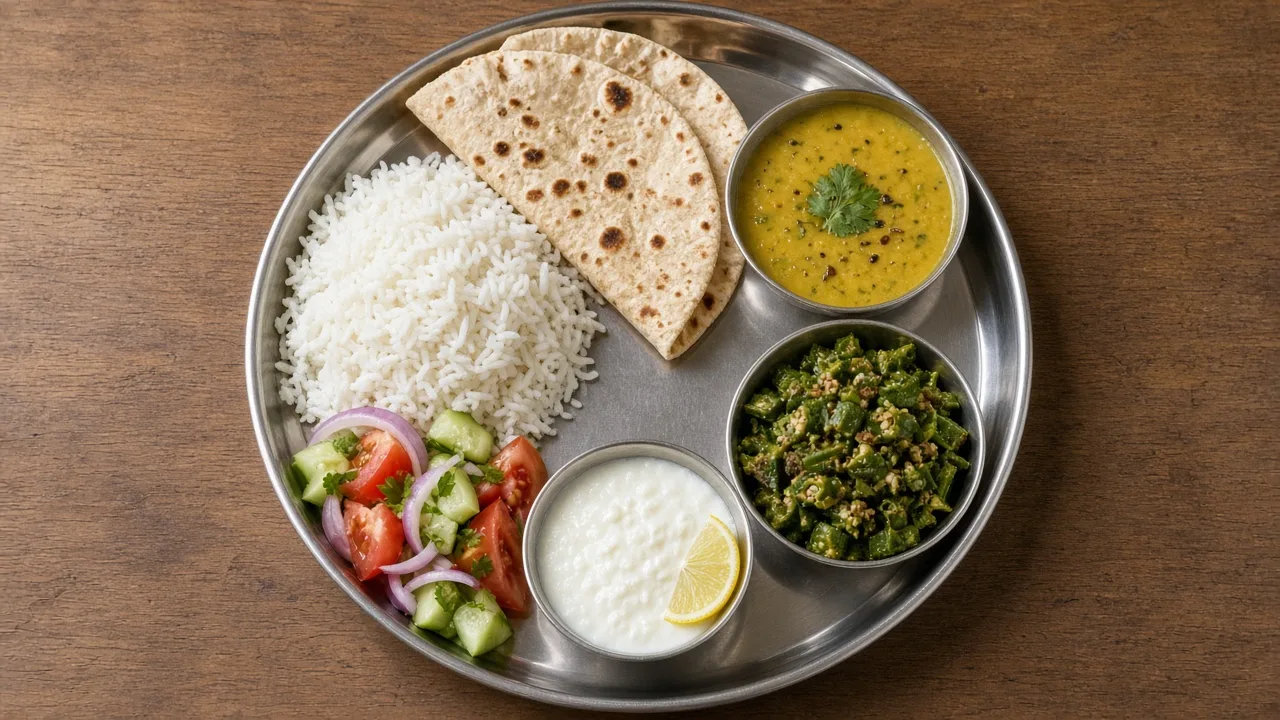
Indian food is wonderfully varied, and a traditional thali already contains many of the elements of a balanced meal. Yet modern routines often tilt our plates towards too much refined grain and too little protein and vegetables. You do not need to follow a strict diet chart to eat well. Understanding how to balance the different parts of your plate is a good place to start.
The idea of a balanced plate
A helpful way to picture a balanced meal is to divide your plate into sections.
- Half the plate: vegetables. Sabzi, salad, raita with vegetables, or a light soup.
- A quarter: protein. Dal, rajma, chole, paneer, curd, eggs, fish or chicken.
- A quarter: grains. Rice, roti, millet bhakri, or poha and upma at breakfast.
- A small amount of healthy fat. A teaspoon of ghee or oil in cooking, a few nuts or seeds.
This is not a rigid rule, but it gently shifts the focus from large mounds of rice or a stack of rotis towards more vegetables and protein.
Choose your grains wisely
Grains give us energy, and there is no need to fear them. The key is the type and the quantity.
- Mix in whole grains. Try whole wheat atta, brown or hand-pounded rice, and traditional millets such as jowar, bajra and ragi.
- Watch portion sizes. Two medium rotis or a cup of cooked rice is a reasonable portion for many adults; adjust to your activity level.
- Limit refined options such as maida-based breads and fried snacks to occasional treats.
Do not skip the protein
Many Indian vegetarian meals are low in protein, especially when dal is thin or served in small quantities. Protein helps keep you full, supports muscles and steadies energy levels.
- Make dal a little thicker, or have a full katori rather than a spoonful.
- Combine dal and rice or roti, which together provide a good mix of amino acids.
- Add sprouts, chana, besan chilla, paneer, tofu or curd to meals.
- If you eat non-vegetarian food, eggs, fish and chicken are good options.
Fill up on vegetables
Vegetables provide fibre, vitamins and minerals. Aim for variety and colour across the week.
- Include leafy greens such as palak, methi and amaranth a few times a week.
- Rotate seasonal vegetables; they are fresher and often cheaper.
- Add a simple kachumber salad of cucumber, onion and tomato to lunch and dinner.
- Avoid overcooking vegetables until they are mushy.
Fats, salt and sugar
Fat is essential, but it adds up quickly through tadkas, fried snacks and sweets.
- Measure your oil with a spoon instead of pouring from the bottle.
- Rotate cooking oils such as mustard, groundnut and sesame, and use ghee in small amounts.
- Go easy on salt, including pickles, papads and packaged namkeen.
- Keep sweets as a treat rather than an after-meal habit every day.
A sample day of balanced meals
- Breakfast: Vegetable poha with peanuts and a bowl of curd, or two besan chillas with mint chutney.
- Mid-morning: A seasonal fruit or a handful of roasted chana.
- Lunch: Two rotis, a katori of dal, a vegetable sabzi, salad and buttermilk.
- Evening: Tea with a few nuts or a bowl of sprouts chaat.
- Dinner: A smaller portion of rice or millet, a vegetable curry, paneer or egg bhurji, and a salad.
Simple swaps that add up
- Swap sugary drinks for buttermilk, lemon water or plain water.
- Choose roasted makhana instead of fried chips.
- Have fruit whole rather than as juice.
- Use curd or raita instead of creamy gravies.
Eat mindfully
How you eat matters too. Sit down for meals, eat slowly and pay attention to hunger and fullness cues. Eating in front of the television or phone often leads to overeating without noticing. Sharing meals with family is also a great way to make healthy eating a shared habit.
Balanced eating is not about giving up the foods you love. It is about building a plate that leaves you satisfied, energised and nourished, one meal at a time.
Note: This article offers general guidance only; if you have diabetes, a medical condition or specific dietary needs, please consult a doctor or registered dietitian.